News

2016 Case Competition Presentations

July 19, 2016
Below is a list of the finalist teams and presentations from other participating university teams.

Finalists

Our Lady of Fatima University (1st place)

Tokohu University

University of Kyoto

Team Presentations

Far Eastern Federal University (FEFU)

University of Southern California (USC)

University of California, Los Angeles (UCLA)

University of Tokyo

National Taiwan University (NTU)

UNSW Australia

University of Malaya

2016 Case Competition Challenge: "Preparing Pacific Rim Countries for Natural Disasters"

July 19, 2016

The Case

For the inaugural APRU Global Health Program Case Competition we encouraged teams to consider a balance of innovative yet realistic, evidence-based solutions. The plot in this case study is fictional and bears no direct reflection to any existing organization or individual. This case was created exclusively for use in the 2016 APRU Global Health Case Competition. Any reuse, reproduction, or distribution of this case material must be approved by the USC Institute for Global Health or APRU. For questions, please contact Mellissa Withers at [email protected].

Introduction

Floods. Tropical storms. Earthquakes. Tsunamis. Landslides. Droughts. Natural disasters are on the rise worldwide. There are more and more intense natural disasters - which are defined to cause at least 100 deaths or to affect the basic survival needs of at least 1,000 people - resulting from floods and storms as well as droughts and heat waves. The Pacific Rim region is the most disaster-prone region in the world and has experienced some of the most damaging disasters in recent decades, with alarming consequences for human welfare. (ESCAP, 2013). Since 1970, countries in Asia and the Pacific have been hit by more than 5,000 disasters causing more than two billion fatalities and affecting the lives of more than six billion. For example, the Philippines is often devastated by typhoons, including the Super Typhoon “Haiyan” in November 2013 which killed over 6,000 people and displaced approximately 4 million people (NDRRMC: 2014). Earthquakes and tsunamis have wrought devastation over the period, with some of the worst events being the 1976 Great Tangshan Earthquake which killed almost 242,000 people in China, the 2004 Indian Ocean Tsunami that killed over 220,000, and, more recently, the 2011 Great East Japan Earthquake that killed almost 20,000 people and affected the lives of around 369,000. There are many social, economic and environmental factors that determine the vulnerability, exposure and impact of a disaster on people or a country. Over the past 45 years, the region’s population has almost doubled from 2.2 billion in 1970 to 4.3 billion in 2014. Cities have expanded with the migration of people from rural areas in search of livelihoods and opportunities, with 47.7% of the population of the Pacific Rim region now living in cities compared to only 25.9% in 1970. Often the poor and the most vulnerable settle in hazardous areas such as flood plains or along fault-lines because the land is more affordable or it is the only land available in densely populated areas. In Asia-Pacific countries, economic losses increased by almost 15 times since 1970 while the region’s GDP only grew 5 times, suggesting that building resilience to disasters is likely a necessary condition for protecting region’s growth prospects (UNESCAP, 2015).

Key Points

Highlights from UNESCAP’s 2015 report Overview of Natural Disasters and their Impacts in Asia and the Pacific 1970-2014.

  • In the past decade alone, a person living in the Asia-Pacific was twice as likely to be affected by a natural disaster as a person living in Africa, almost six times as likely as someone from Latin America and the Caribbean, and 30 times more likely to suffer from a disaster than someone living in North America or Europe.
  • Over 2 million people died from natural disasters between 1970 and 2014 in Asia and the Pacific, or 56.6% of the fatalities globally. Earthquakes and tsunamis were the main cause of deaths, despite their relatively infrequent occurrences.
  • Six billion people from the region were affected by disasters over the same period, or 87.6% of people affected globally. Floods and drought were not the deadliest disasters but affected the highest number of people at 5 billion.
  • Economic loss from natural disasters surged significantly in the region from $5 billion in the 1970s to around $75 billion in recent years, or 28% of the global economic loss, to 51% more recently. Over US$ 1.15 trillion was lost from natural disasters during this 45 year period. Four types of disasters - earthquakes, tsunamis, floods and storms - were responsible for 91.8% of the total economic losses. 

Background

Traditionally, governments in the Pacific Rim region have taken a reactive approach in dealing with natural disasters- focusing on relief and rehabilitation efforts. Recently, more attention has been given to the need to develop a more comprehensive approach of identifying hazards and mitigation strategies, building community resilience and integrated and coordinated response efforts. In order to reduce vulnerability to disasters and to decrease potential impacts of disasters on communities, it is important to better prepare communities for disasters and to Key Points Background USC Institute for Global Health http://globalhealth.usc.edu 2001 North Soto Street, SSB 312K [email protected] Los Angeles, CA 90033 MC 9239 T: 323.865.0419 F: 323.865.0103 increase communities’ resilience to natural disasters. Given that funds are more available for emergency response than preparedness and risk reduction, it is important that disaster risk reduction activities build better capacity among communities to withstand future disasters. Community-based disaster preparedness programs are an essential part of risk reduction activities. Communities can often contribute in meaningful ways. They have important knowledge on their communities’ hazards and vulnerabilities, as well as their strengths and resources. Involving communities in these plans can also be empowering and more effective. Potential approaches to community disaster preparedness may include educational campaigns, media campaigns, community-based trainings, and disaster simulation activities. Enhancing cooperation between all the stakeholders involved in disaster management, including national governments, disaster relief agencies, and local civil society groups is also recommended. 

The Challenge

Your team has been hired as consultants to UNESCAP to help prepare the most at-risk communities in Pacific Rim countries to prepare for, and respond to, natural disasters. You have been tasked with developing and presenting a detailed strategic plan to address disaster risk reduction and disaster preparedness in one country in the region over the next three years. Your plan should focus on disaster preparedness and community risk reduction at the community level. It should incorporate innovative, up-to-date, and culturally-appropriate strategies to address this issue. Teams should consider real-world opportunities and challenges and come up with a plan that they feel is realistic. Teams can choose one type of natural disaster or decide to focus broadly on all types of natural disasters. They can also develop a national plan or to focus on specific communities in the chosen country and can include many different activities or one major activity.

The plan should include:

  • an analysis of research related to disaster risk reduction and disaster preparedness in Pacific Rim countries
  • an analysis of the chosen country in terms of natural disaster and current state of disaster risk reduction and disaster preparedness activities, as well as a justification for why this country/community was chosen
  • a detailed description of the main program objectives, activities and expected results  a timeline of activities
  • specific short (Year 1), mid (Year 2), and long‐term objectives (Year 3 and beyond) and a detailed plan as to how these objectives will be measured
  • strategies to develop collaborations and combine resources with the local, national, and international non‐governmental organizations (NGOs), particularly those that are already working in disasters
  • a total budget of US$5 million for your chosen country for the three-year program

You will present your plan to UNESCAP representatives in a 14-16-minute video. Teams are encouraged to develop engaging and creative visual materials for the presentation but should make the presentation as if the team is making the presentation in front of an audience. Provide a link to the video on youtube or vimeo to Mellissa Withers via email to [email protected] by 11:59pm PDST on June 1. At the beginning or end of the video, please provide a slide with full name, discipline of study, affiliated department and institution, and academic status as of May 2016 (e.g. undergraduate, graduate, etc.) for each team member. Teams should be comprised of 5-6 members. Please review our website for more details on eligibility criteria and judging- http://theapruglobalhealth.org/casecompetition. This should be a student-driven activity with minimal input from faculty mentors.

REFERENCE: http://www.unescap.org/sites/default/files/Technical%20paperOverview%20of%20natural%20hazards%20and%20their%20impacts_final.pdf

Faculty Search for the Center for Tobacco Control Research Zhejiang University School of Medicine

May 11, 2016

The Center for Tobacco Control Research at Zhejiang University School of Medicine in China is an academic organization built in 2007. The group includes a multi-disciplinary team of researchers from public health, public policy, and behavioral science, as well as several renowned international experts who were invited to act as Senior Science Consultants. The Center’s primary academic focus is to develop culturally relevant methodology and tools for tobacco control in China and to understand tobacco use in socio-behavioral perspectives.

In recent years, the Center has undertaken numerous tobacco control research projects. For example, its serial projects of Tobacco Control Advocacy Capacity covered more than 70 cities of all provinces of China. Researchers at the Center have successfully published in major international journals and several of these papers were cited by the WHO in their report on the global tobacco epidemic, and other official documents. Major findings of their project “Global Health Professions Student Survey (GHPSS) in Tobacco Control in China” were released by the United Nations.

The Center is seeking one or two faculty candidates to conduct tobacco control research. Applicants should hold a PhD degree by the time of appointment. Postdoctoral experience is not required but is preferred. PhD Graduates, Postdoctoral Fellows, Assistant Professors or Associate Professors are welcome. Successful candidates will be employed as Project Assistants and Principal Investigators according to their qualifications. Candidates must be able to work full-time and are expected to establish a competitive, independent research projects.

The Center is located in the beautiful tourism city of Hangzhou, only 50 minutes to the south of Shanghai. Zhejiang University offers a competitive salary, office, laboratory spaces, as well as research start-up packages.

Qualified applicants are encouraged to submit their application package electronically to the Director of the Center (Dr. Tingzhong Yang) via email: [email protected].

Applicants should include the following materials in PDF format: a comprehensive C.V., a statement of research and teaching plan, and a list of 3 to 5 references with detailed contact information. All materials must be in English.

Contact: Tingzhong Yang

Tel: +86-571-88208219


Scholarships Available for 2016 APRU Global Health Program Workshop

March 31, 2016

Scholarships Available

APRU and UNSW Australia are pleased to announce that a number of AU$1000 scholarships are available for APRU Global Health members who will be presenting papers or posters at the 2016 APRU Global Health Program Workshop in Sydney, Australia. Scholarships are intended to cover costs associated with attending the workshop such as flights and accommodation. All presenters are eligible to apply for a scholarship. However, priority will be given to those with financial need. Scholarship applications will close Friday 29 July. Applicants will be notified of the outcome by 5 August.

Apply here: https://unswinternational.wufoo.com/forms/scholarship-apru-global-health-workshop/

Student Survey: Tobacco and e-cigarettes among students in the Pacific Rim

February 17, 2016


The APRU Global Health Program, housed at the University of Southern California, invites you to participate in a new collaborative study titled An online survey of tobacco and e-cigarettes among students in the Pacific Rim.”

In previous annual workshops of the Global Health Program, we identified the need to learn more about students’ awareness and use of tobacco and e-cigarettes. You are probably aware that electronic, or “e-cigarettes”, are a new generation of devices that deliver a nicotine-containing vapor to their users. Many products are flavored and marketed to university-aged young adults. The GHP has created a survey to obtain information on student’s tobacco use, perceptions regarding e-cigarettes, exposure to e-cigarette marketing, and other related topics. The results may help us to identify which policies may be most effective in reducing students’ tobacco use and should help member universities as they consider how to control use of e-cigarettes.

We hope that ALL APRU member universities will participate. Any other interested university is also welcome to participate. The survey is in English and is available online until September 1, 2016. It only takes about 15 minutes to complete. 

The link is: https://usckeck.qualtrics.com/SE/?SID=SV_bHt6E3WEE8xQhQ9

The goal of this project is to obtain a varied sample of at least 150 students from different disciplines, age groups and programs at each university. Undergraduate and graduate students are eligible. This study was approved by the USC Institutional Review Board (IRB) (HS-15-00355.) Since this is an anonymous, online survey that is being conducted by a USC research team with their own IRB approval, it might not be necessary for you to obtain your own approval. However, we encourage you to ensure this with your own institution. We can provide our IRB application if you need it. We are leaving it up to each university to decide on the best data collection protocol and report this back to us with the information below. Some suggestions are:

  • Sending the survey link out via email or listserv to all students
  • Having instructors give students in selected classes time to complete the survey in class
  • Assigning student interns to collect data by attending selected classes or events

Please confirm with Dr. Mellissa Withers by March 1, 2016 that you will participate. Please contact her at [email protected] if you have any questions. Thank you in advance!

Participation Information

If your institution will participate, please provide the following information in your email to Dr. Withers:

  • Name
  • University
  • Please describe how students were chosen to participate
  • Please describe how this survey was administered
  • Comments


Call for Entries - APRU Global Health Case Competition

April 01, 2016 to September 30, 2016


APRU has the great pleasure of inviting member Universities to participate in a new and exciting initiative for students - the first annual APRU GLOBAL HEALTH CASE COMPETITION, which has been designed and set up by the Global Health Program, housed at the University of Southern California.

Three videos from this international virtual competition will be chosen by a panel of APRU Global Health Program members to be shown at the final round taking place during the annual workshop in Sydney. The winning team will be announced at the workshop and a prize of $500US will be awarded.

The competition is open to students at all levels and areas of study.

Timeline:

  • April 01 - Deadline for universities to register 
  • May 15  - Case challenge sent out via email 
  • June 01 - Final video submission due
  • July  01 - Three finalist teams announced 
  • Sept 30 - Final competition held at APRU annual workshop in Sydney, Australia 

More information: http://theapruglobalhealth.org/casecompetition
To register, if you have any queries or are interested to be a judge please email Melissa Withers at [email protected].

Rules for the Road: Global Health, Safety and Security for Deploying Students, Staff, and Clinicians Overseas

February 16, 2016

Global health work and training in underserved areas presents unique opportunities to serve and to learn, but also increases exposure to safety risks. Global health programs have a duty to properly prepare and train staff, faculty and students prior to departure. Health care workers and their employers must understand their respective roles in the protection and support of their global health workforce, including their legal responsibilities, minimum operational standards, and support structures. 

This webinar by the Consortium of Universities for Global Health consisted of short presentations with case discussion from the headquarters and field perspective including important roles and responsibilities within organizations and what are the most pressing issues related to health, safety, and security of deploying faculty, students and staff.

View the webinar

CUGH builds interdisciplinary collaborations and facilitates the sharing of knowledge to address global health challenges. It assists members in sharing their expertise across education, research, and service. It is dedicated to creating equity and reducing health disparities everywhere. CUGH promotes mutually beneficial, long-term partnerships between universities in resource-rich and resource-poor countries, developing human capital and strengthening institutions' capabilities to address these challenges. It is committed to translating knowledge into action.

Global Health LIVE

November 24, 2015


 Global Health LIVE is a new and innovative graduate seminar for graduate students that was co-designed by Professors Terry Schmidt (from UC Irvine) and Mellissa Withers (USC). The course was offered for the first time in Fall 2015. The course extended the theory of global health to the practice of global health.  The relationship of health, foreign policy, and global health leadership were the cutting edge of the scope of the course. Students from five universities (four of them are APRU members) attended the live session simultaneously for 10 weeks. These included: USC, UC Irvine, U of Tokyo, NTU and Chinese University of Hong Kong. A live seminar was held once per week for two hours via live video using the google hangouts platform. An international guest lecturer and global health leader spoke during each session. Guest lecturers included famous global health leaders, including Hans Rosling, Purnima Mane, Al Somer, Larry Gostin and several others. Then students interacted with the lecturer and each other in her teams. One of the major assignments of the course was to work in groups (from the five different universities) to create a video on a global health leadership topic. The videos are posted on our website. We hope that this course would be offered in the future and that APRU member universities will be able to participate.


Climate Change and Health

Diabetes + IDF Video Project, Global Health Live 2015 Group B

HPV Vaccine: Prespective Around the World

Team C: Global Perspectives on Air Pollution

2015 APRU Global Health Program Workshop

October 30, 2015 to November 01, 2015

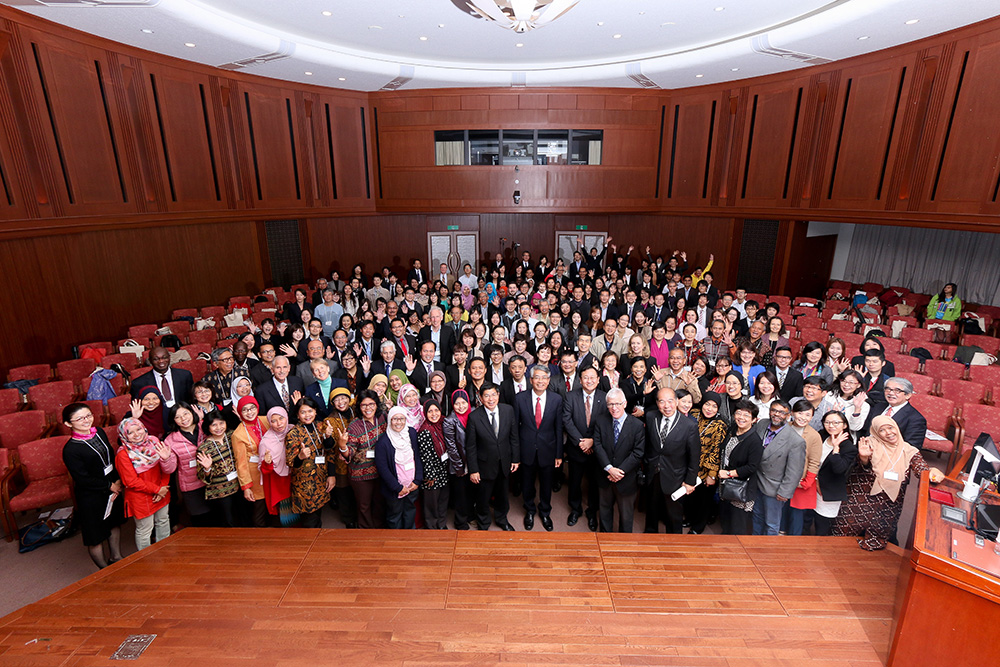
The 2015 Global Health Program Workshop for the Association of Pacific Rim Universities took place at Osaka University in Japan Oct. 30 – Nov. 1, 2015.  The next workshop will take place in Sydney, Australia, hosted by the University of New South Wales Sept. 28-30, 2016.

Presentations:

Download the list of presenters here [PDF]

Participants

215 participants from the following countries and universities attended (APRU members in bold):
 

  1. Australia —University of New South Wales, University of Sydney
  2. Bangladesh
  3. China — Fudan University, Peking University, Duke Kunshan University
  4. | Hong Kong, University of Macau
  5. England — University of Manchester
  6. Ghana —  United Nations University Institute for Natural Resources in Africa
  7. Indonesia — University of Indonesia, Hassanuddin University, Syarif Hidayatullah State Islamic University, Warmadewa University
  8. Japan —
    Keio University, Kyoto University, Osaka University, Tohoku University, University of Tokyo, Baika Women's University, Chiba University, Fukushima Medical University, Mie Graduate School of Medicine, Morinomiya University of Medical Sciences, Mukogawa Women's University, Nagoya University School of Medicine, Nara Women's University, Osaka Medical College, Saga University, Shiga University of Medical Science, University of Tsukuba
  9. Laos
  10. Malaysia — University of Malaya, National University of Malaysia
  11. Mexico — Monterrey Institute of Technology
  12. Mongolia
  13. New Zealand — University of Auckland
  14. Philippines — University of the Philippines, Cavite State University, City University of Marikina, University of the East Ramon
  15. Russia — Far Eastern Federal University
  16. Singapore — National University of Singapore
  17. South Korea — Korea University, Seoul National University, Sookmyung Women's University
  18. Taiwan — National Taiwan University, Fooyin University, Kainan University
  19. Thailand — Chulalongkorn University, Mahidol University
  20. United States of America — University of California, Irvine; University of California, Los Angeles; University of Southern California; California State University Northridge, Duke University
  21. Vietnam — Hanoi School of Public Health


Photos:

See photos from the conference here.

Links:


Pages